
Negative List of Foreign Investment in Thailand
Thailand, as an important investment destination in Southeast Asia, has a high degree of openness to foreign investment. However, in some industries involving national security, traditional culture, and resource protection, Thai laws explicitly restrict or prohibit foreign investment from entering. The foreign investment access restrictions in Thailand are mainly stipulated by the Foreign Business Act (B.E. 2542, 1999, abbreviated as FBA), which clearly lists the industries that prohibit or restrict foreign investment from entering. The Thai government has not separately released a "negative investment list" document, but FBA manages foreign investment through the following three industry lists:

Thailand's Foreign Business Act (FBA) was promulgated in 1999, which sets out the restrictions on foreign-funded enterprises operating in Thailand. This law categorizes industries with restricted foreign investment into three types:
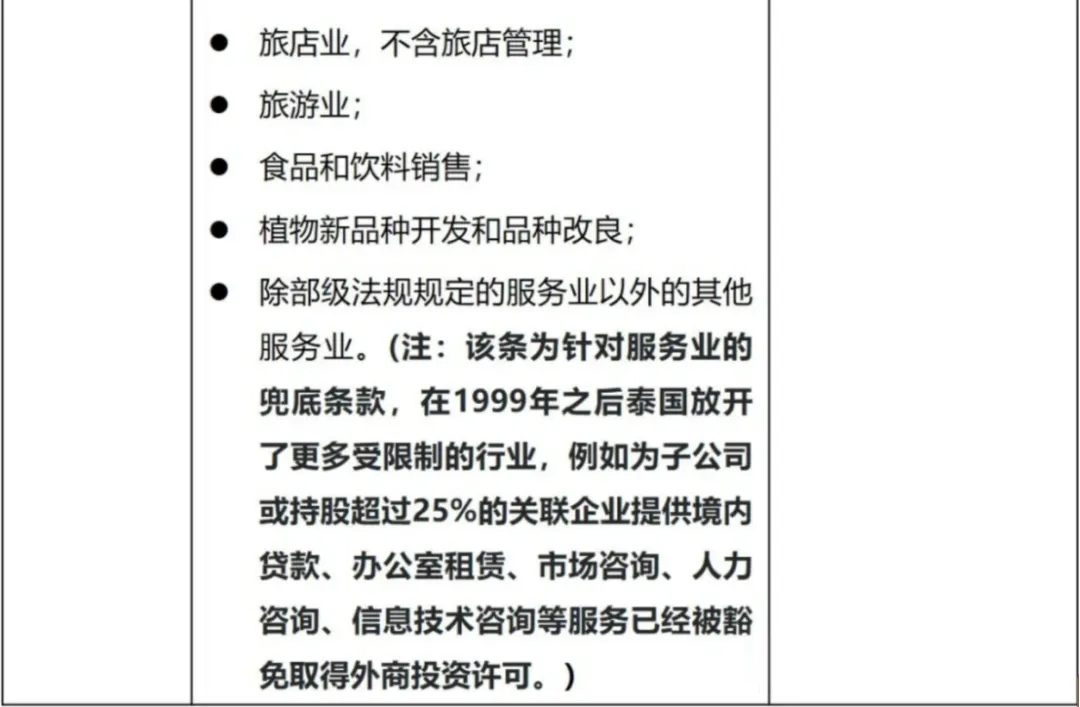
List 1: Industries completely prohibited from foreign investment
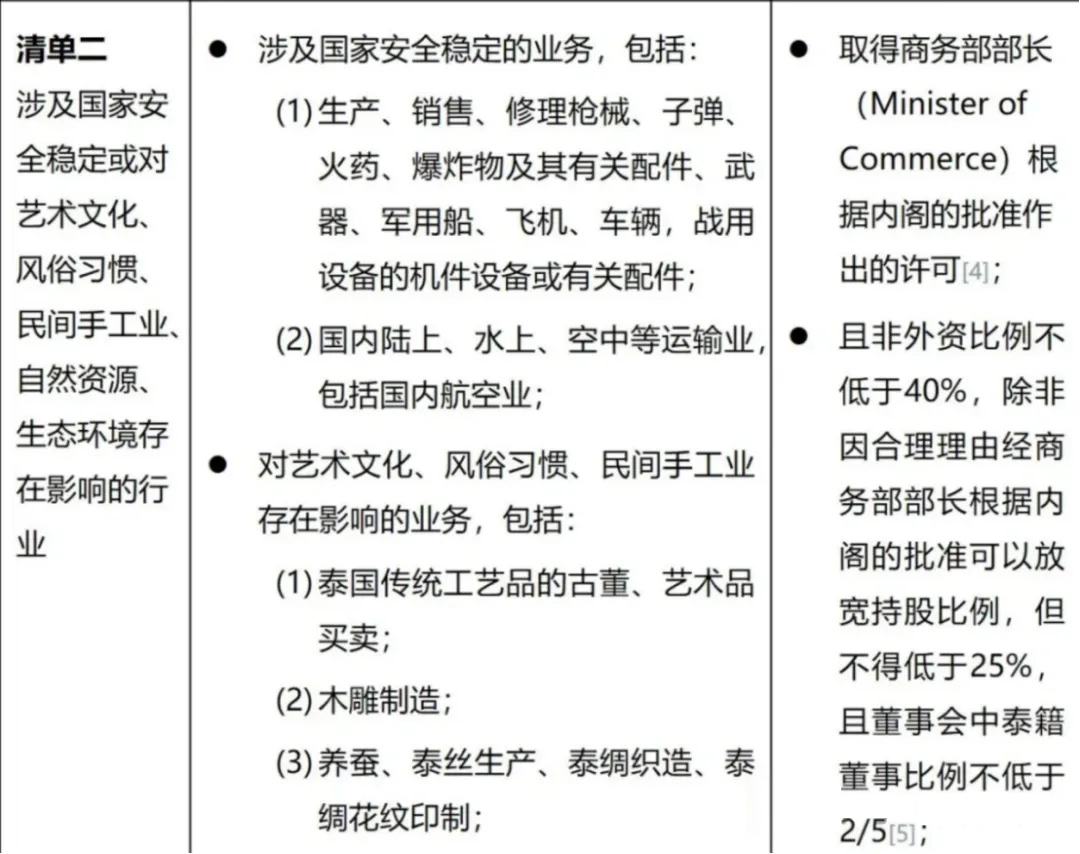
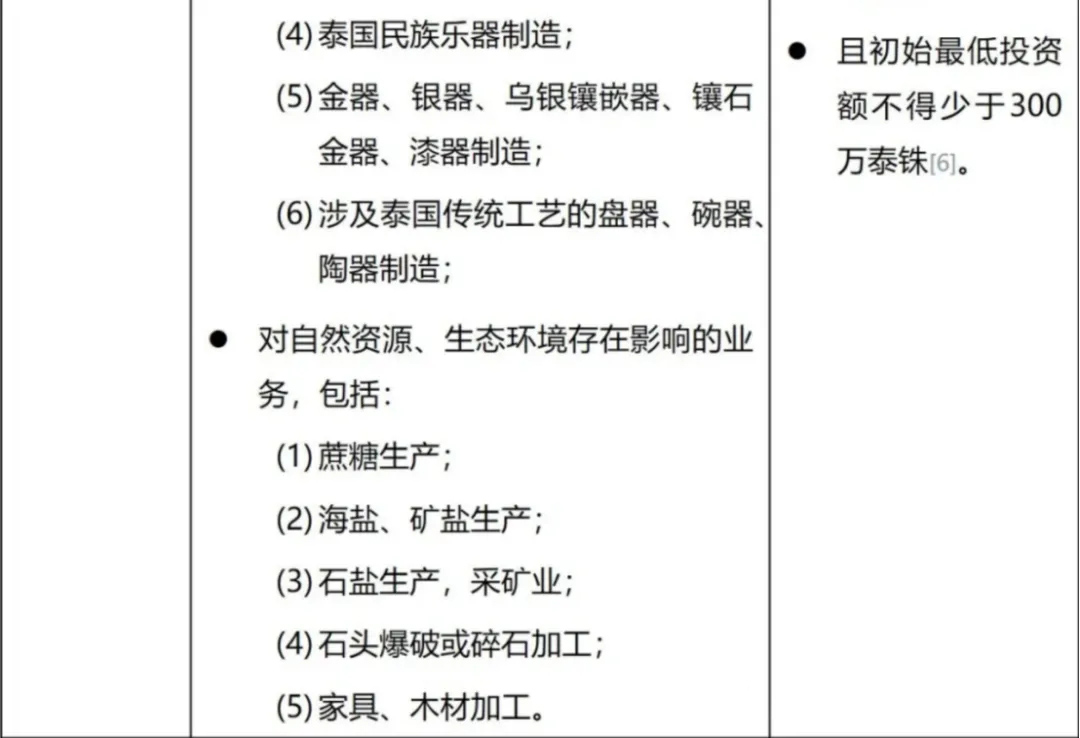
List 2: Foreign funded industries that require special approval from the Thai Ministry of Commerce
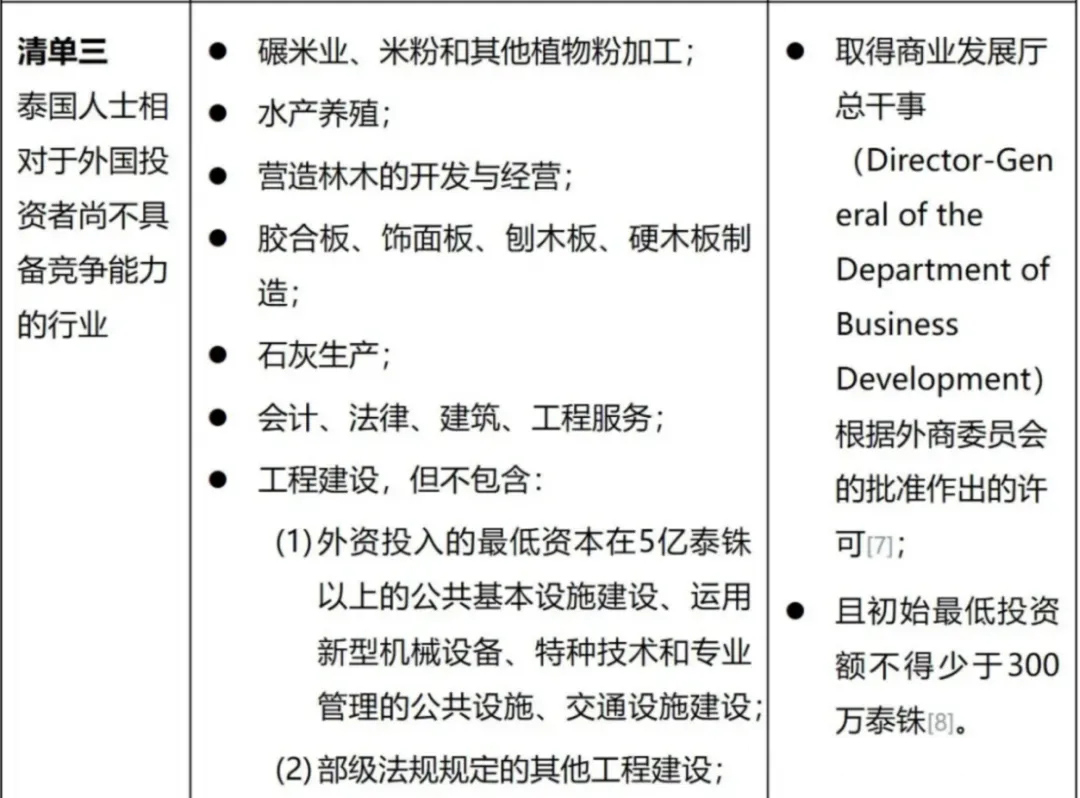
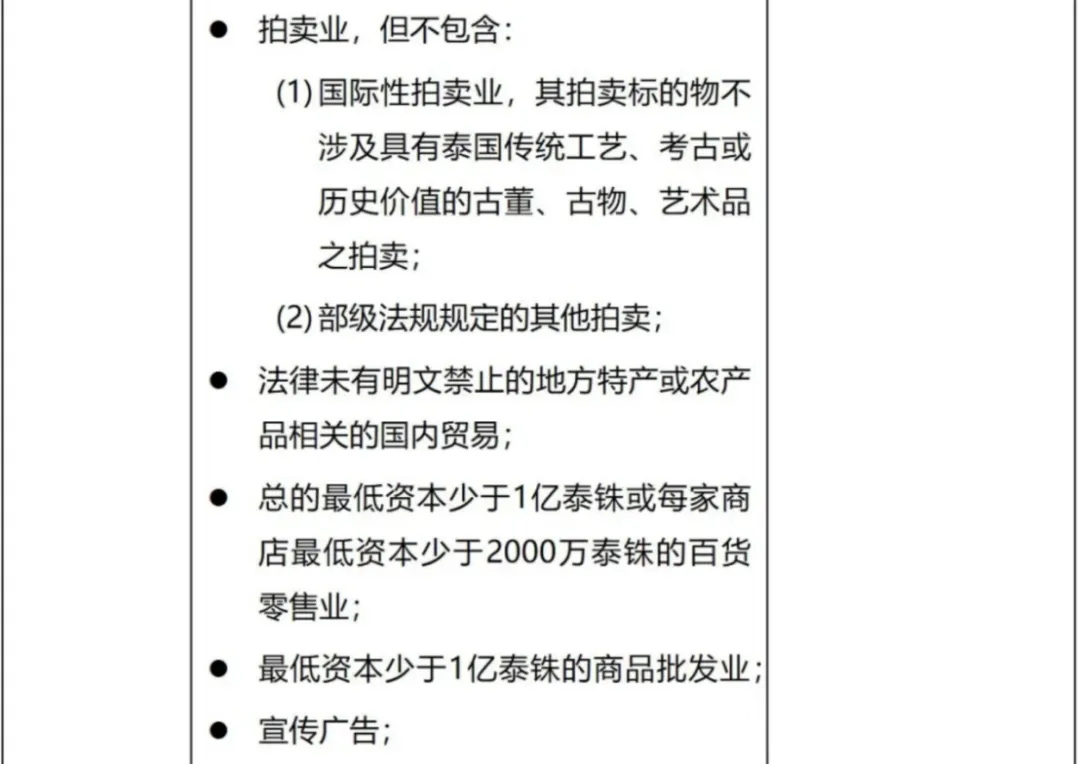
List 3: Foreign funded industries that require approval from the Department of Business Development (DBD) of Thailand
According to the Foreign Investment Law, "foreign investor" is:
(1) Natural persons who are not Thai nationals;
(2) Non registered legal entities in Thailand;
(3) Legal person registered in Thailand with the following circumstances: (a) foreigners or foreign legal persons hold 50% or more of the shares of the enterprise [2] or the investment amount accounts for 50% or more of the total investment of the enterprise; (b) Limited partnership or general partnership in which the managing partner or manager is a foreigner;
(4) A legal entity registered in Thailand whose 50% or more of its shares are held by entities under (1), (2), or (3), or whose 50% or more of its investment amount is invested by entities under (1), (2), or (3).
02 · Industries completely prohibited from foreign investment (List 1)
Despite industry restrictions, the Thai government provides preferential policies for foreign investment through the Eastern Economic Corridor (EEC) and the Board of Investment (BOI) of Thailand 1. Eastern Economic Corridor (EEC)
Target industries: High value-added industries such as new energy vehicles, intelligent electronics, and biotechnology allow foreign investment to hold 100% of the shares.
Land ownership: Within the EEC region, foreign-funded enterprises can purchase land for designated industries, breaking through traditional land restrictions.
2. Industries that BOI encourages investment
High tech manufacturing: Foreign investment in semiconductor, robotics, aerospace and other fields can enjoy corporate income tax exemptions (up to 8 years of tax exemption).
Green energy: Foreign funded enterprises in solar and wind energy projects can hold 100% of the shares and be exempt from equipment import tariffs.
3. Free Trade Zone (FTZ)
Bonded processing: Within the FTZ, foreign-funded enterprises can import raw materials and export finished products without tariffs, and some industries can break through shareholding restrictions.
06 · Compliance strategies for foreign investment entering Thailand
1. Joint venture model: Joint venture with Thai companies in restricted industries (such as retail and telecommunications), with the Thai side holding 51% of the shares.
2. Applying for BOI qualification: Investing in industries encouraged by BOI can enjoy relaxed shareholding ratios, tax incentives, and fast approval.
3. Lease instead of purchase: Use land through long-term leasing (30+30 years) to avoid land ownership restrictions.
4. Localized operations: Hire Thai executives, use local supply chains, and reduce policy risks.
Thailand's industry restrictions on foreign investment mainly focus on national security, traditional culture, and local vulnerable industries. However, through policies such as EEC and BOI, the government is gradually relaxing the entry conditions for emerging industries such as high-tech and green economy. For investors, it is important to note:
Compliance priority: Before entering restricted industries, it is necessary to thoroughly study FBA and BOI policies;
Grasp policy dividends: EEC and digital economy are future investment hotspots;
Local cooperation: Establishing partnerships with Thai companies or governments is the key to success.
Thailand's Foreign Business Act (FBA) was promulgated in 1999, which sets out the restrictions on foreign-funded enterprises operating in Thailand. This law categorizes industries with restricted foreign investment into three types:
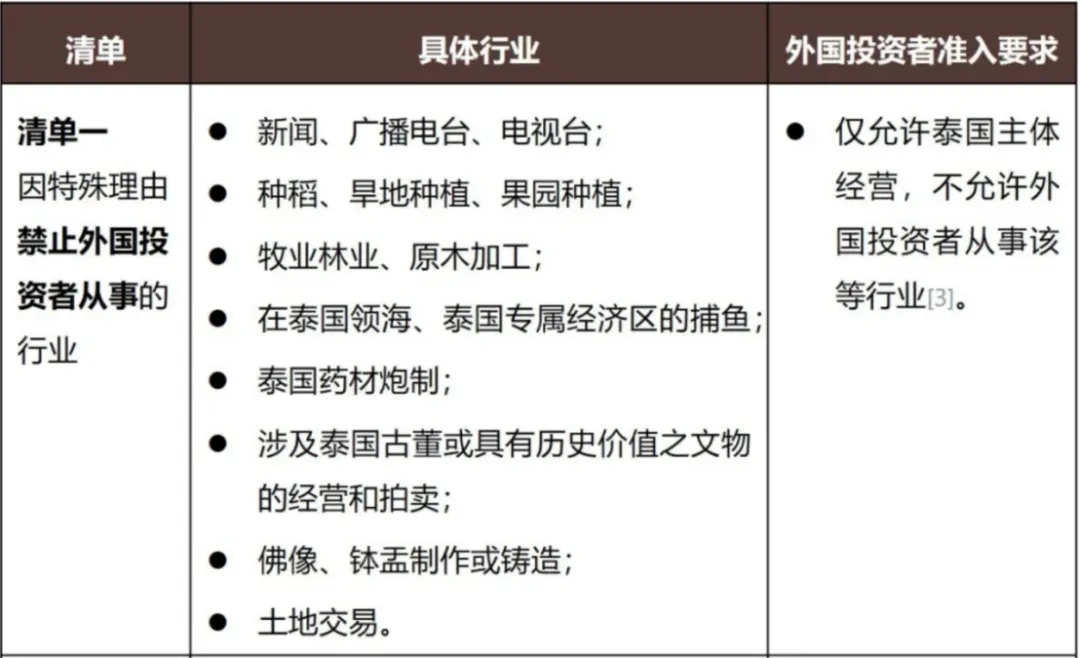
List 1: Industries completely prohibited from foreign investment
List 2: Foreign funded industries that require special approval from the Thai Ministry of Commerce
List 3: Foreign funded industries that require approval from the Department of Business Development (DBD) of Thailand
According to the Foreign Investment Law, "foreign investor" is:
(1) Natural persons who are not Thai nationals;
(2) Non registered legal entities in Thailand;
(3) Legal person registered in Thailand with the following circumstances: (a) foreigners or foreign legal persons hold 50% or more of the shares of the enterprise [2] or the investment amount accounts for 50% or more of the total investment of the enterprise; (b) Limited partnership or general partnership in which the managing partner or manager is a foreigner;
(4) A legal entity registered in Thailand whose 50% or more of its shares are held by entities under (1), (2), or (3), or whose 50% or more of its investment amount is invested by entities under (1), (2), or (3).
02 · Industries completely prohibited from foreign investment (List 1)
04 · Industries requiring approval from the Department of Business Development (DBD) of Thailand (List 3)
Despite industry restrictions, the Thai government provides preferential policies for foreign investment through the Eastern Economic Corridor (EEC) and the Board of Investment (BOI) of Thailand 1. Eastern Economic Corridor (EEC)
Target industries: High value-added industries such as new energy vehicles, intelligent electronics, and biotechnology allow foreign investment to hold 100% of the shares.
Land ownership: Within the EEC region, foreign-funded enterprises can purchase land for designated industries, breaking through traditional land restrictions.
2. Industries that BOI encourages investment
High tech manufacturing: Foreign investment in semiconductor, robotics, aerospace and other fields can enjoy corporate income tax exemptions (up to 8 years of tax exemption).
Green energy: Foreign funded enterprises in solar and wind energy projects can hold 100% of the shares and be exempt from equipment import tariffs.
3. Free Trade Zone (FTZ)
Bonded processing: Within the FTZ, foreign-funded enterprises can import raw materials and export finished products without tariffs, and some industries can break through shareholding restrictions.
06 · Compliance strategies for foreign investment entering Thailand
1. Joint venture model: Joint venture with Thai companies in restricted industries (such as retail and telecommunications), with the Thai side holding 51% of the shares.
2. Applying for BOI qualification: Investing in industries encouraged by BOI can enjoy relaxed shareholding ratios, tax incentives, and fast approval.
3. Lease instead of purchase: Use land through long-term leasing (30+30 years) to avoid land ownership restrictions.
4. Localized operations: Hire Thai executives, use local supply chains, and reduce policy risks.

Thailand's industry restrictions on foreign investment mainly focus on national security, traditional culture, and local vulnerable industries. However, through policies such as EEC and BOI, the government is gradually relaxing the entry conditions for emerging industries such as high-tech and green economy. For investors, it is important to note:
Compliance priority: Before entering restricted industries, it is necessary to thoroughly study FBA and BOI policies;
Grasp policy dividends: EEC and digital economy are future investment hotspots;
Local cooperation: Establishing partnerships with Thai companies or governments is the key to success.
Overall, Thailand's foreign investment policy provides broad space for high value-added industries while protecting local interests.
With the advancement of regional economic integration (such as RCEP), Thailand is expected to further optimize its foreign investment access rules and become one of the core hubs for investment in Southeast Asia.